
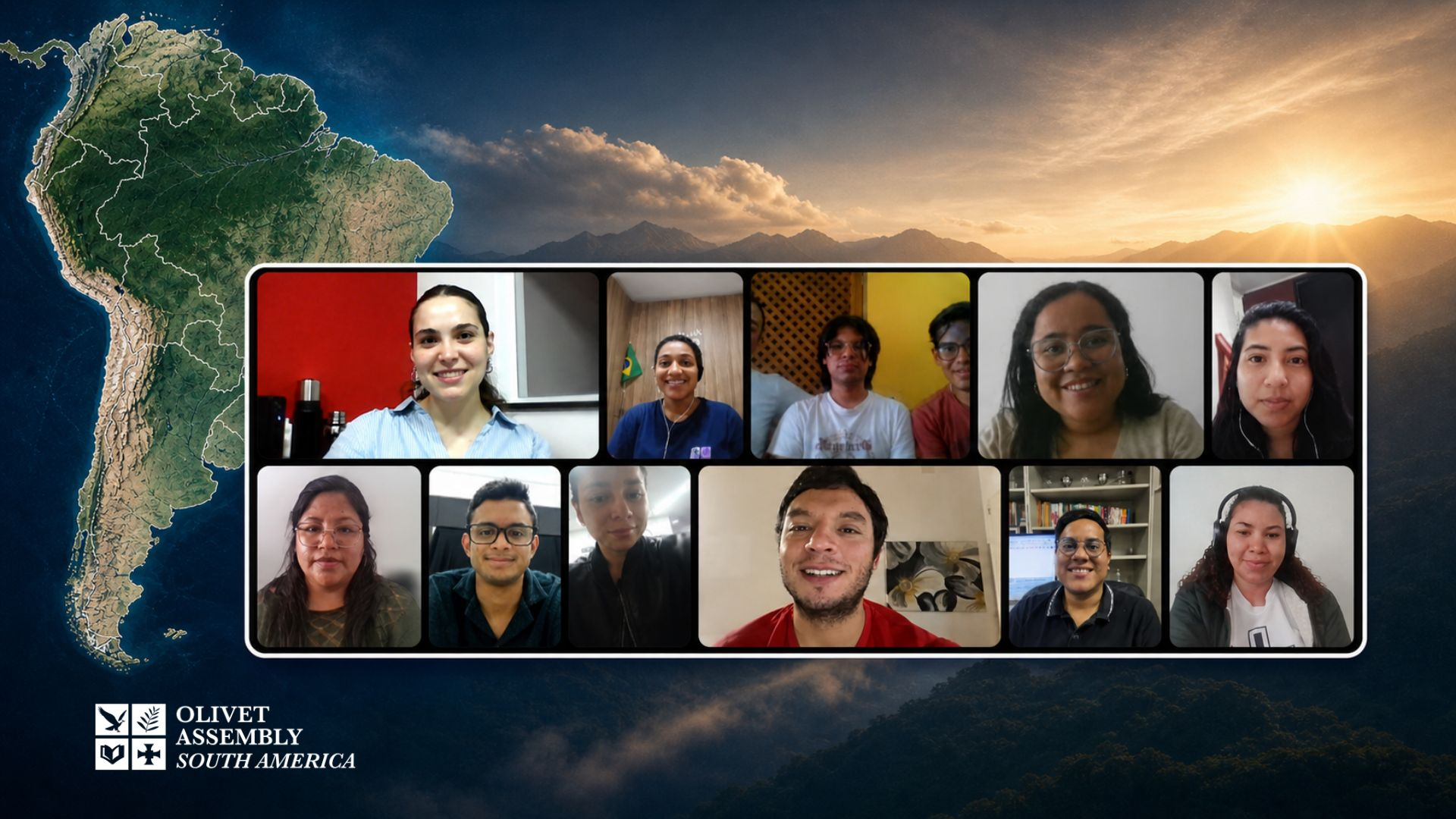
Within the context of the Road to Pentecost, on May 1, 2026, a Bible Study was held with key leaders from South America, based on Way of the Cross II, under the leadership of Pastor Moses Gonzalez. This gathering began with a deep meditation on the Gospel of John, specifically the passage John 14:1-14, centered on Jesus Christ’s farewell discourse under the theme: “I go to prepare a place for you.” From this biblical passage, theological and practical foundations were established to understand the way of the cross from the perspective of Christian leadership.
During the study, the pastor explained that Way of the Cross II is structured in seven readings that cover chapters 14 through 17 of the Gospel of John: three sections from chapter 14, two from chapter 15, one from chapter 16, and culminating in the High Priestly Prayer of chapter 17. Each segment develops essential themes such as comfort in the midst of absence, abiding in love, perseverance in adversity, and unity with God.
At the beginning of the study, the emotional and spiritual context of the farewell discourse is presented. At this crucial moment, even as Jesus was about to face the cross, He chose to comfort His disciples with words of hope and eternal direction. The passage opens with a direct exhortation: “Let not your hearts be troubled; believe in God, believe also in me,” revealing a profound spiritual paradox: the One who is about to face death is the One who strengthens those who remain.
In this sense, the pastor drew on Jesus’ attitude to highlight a model of leadership that transcends human logic. Even in the midst of betrayal, uncertainty, and impending sacrifice, Christ maintains a posture of pastoral care. This example challenges leaders not to focus solely on their own burdens, but to sustain others even in times of personal weakness.
One of the key moments of the study was Jesus’ declaration: “I am the way, and the truth, and the life; no one comes to the Father except through me.” The pastor noted that this statement not only defines Christ’s identity but also establishes the foundation of the Christian faith: access to God is not a system, but a personal relationship. He also highlighted how the questions of Thomas and Philip reflect the human difficulty in fully understanding this truth, even while being close to the Master.
Regarding practical application, the responsibility of the Christian leader was emphasized. It is not enough to proclaim the gospel; it is necessary to accompany people through their processes, especially in times of crisis. Jesus’ example shows that He not only sought the lost but also strengthened those who remained, preparing them to face uncertainty.
The pastor also explained that the discourse in John 14 cannot be separated from the context of the imminent sacrifice. Jesus does not present the cross as a defeat, but as the necessary path to fulfill the divine purpose. This perspective transforms the way believers face suffering, understanding it as part of the redemptive process.
Toward the end of the passage, the promise that whatever is asked in Jesus’ name will be done for the glory of the Father was highlighted. The pastor used this point to teach that praying in Christ’s name is not a formula, but an expression of alignment with His will, character, and mission. He also recalled the promise that the disciples would do greater works, anticipating the work of the Holy Spirit and the continuation of the Church’s mission.
In this first step of Way of the Cross II, a fundamental truth is established: authentic Christian leadership is born from a deep relationship with Christ, is strengthened in the midst of suffering, and is expressed through genuine care for others. Just as Jesus prepared a place for His disciples, He also left a model of life and leadership that continues to shape and challenge new generations of leaders in South America.