
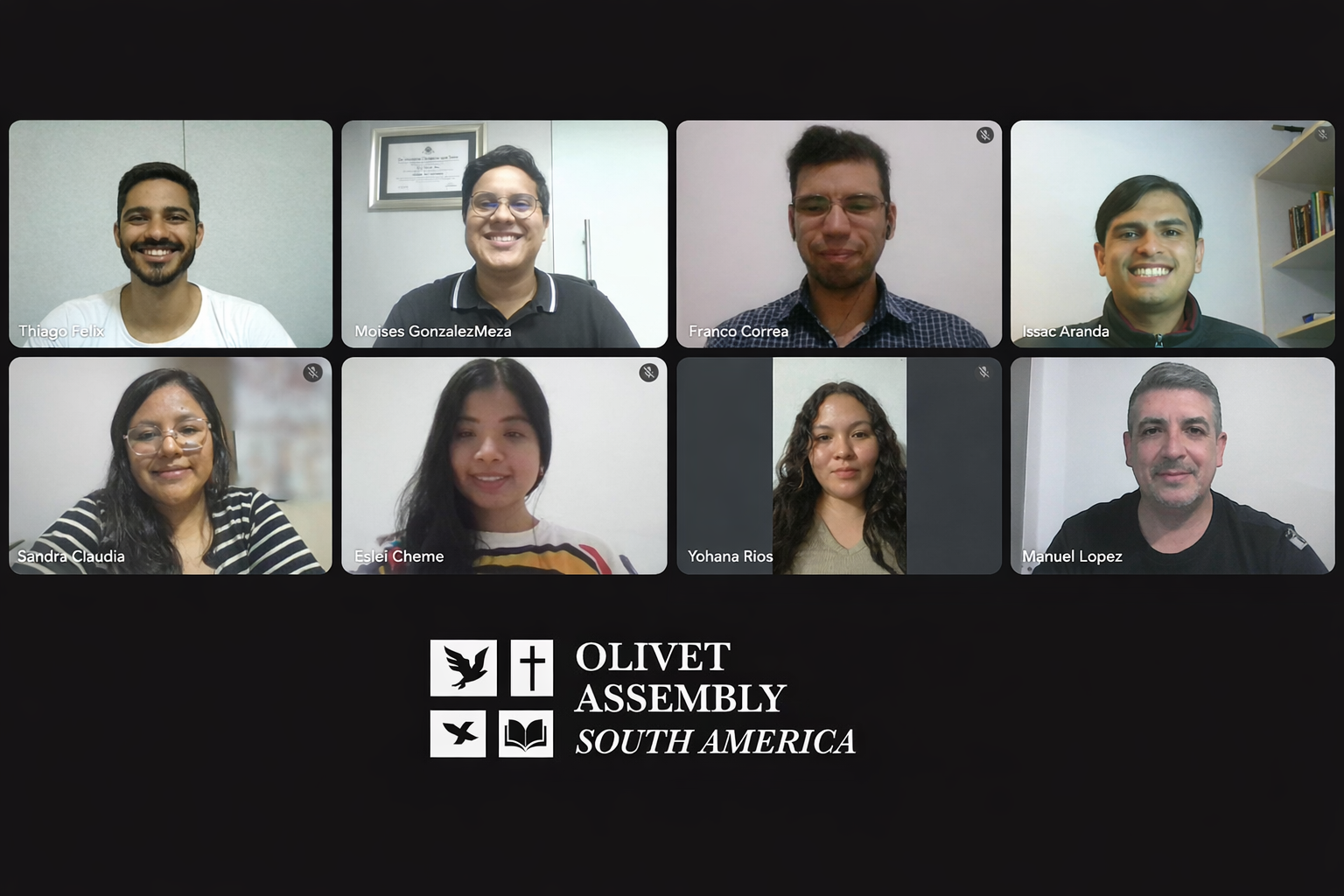
Between November 2025 and February 2026, Olivet Assembly South America entered a decisive phase of structural transition and spiritual affirmation. This period has not merely been operational; it has marked a movement from geographic presence toward stable ecclesial structure-defined by doctrinal clarity, formal membership, and maturing leadership.
The 2026 regional vision is explicit: to transform non-pioneer cities into active, self-sustaining ministry centers. Expansion is therefore not measured primarily by territorial reach, but by spiritual depth. Progress in Bolivia, where students have systematically completed the study of the Book of Romans, demonstrates a foundational principle: sustainable expansion flows from theological formation. Maturity precedes multiplication.
The regional landscape remains diverse and requires differentiated strategy. Colombia and Brazil continue to function as structural anchors, supported by a critical mass of Committed Members (CMs) and developed infrastructure. Peru and Chile show organized growth capacity through presbyterial structuring and administrative consolidation. Argentina and Venezuela advance under complex external conditions yet display tangible signs of spiritual renewal. Bolivia and Uruguay remain in formative stages, prioritizing doctrinal grounding before rapid deployment.
A significant milestone occurred in Cajamarca, Peru, where the formal signing of membership covenants marked the transition from evangelistic outreach to established church structure. This development reflects institutional maturity and covenantal responsibility within the community.
Human capital remains the region’s most strategic asset. Colombia sustains the largest volume of CMs; Brazil maintains experienced leadership; Venezuela demonstrates notable ministerial resilience; Argentina has experienced renewed evangelistic momentum, highlighted by new baptisms in February; Chile is cultivating generational succession; and Bolivia continues preparing native leaders for future expansion. The trajectory of regional growth is directly tied to the strength of this leadership pipeline.
The 2026 expansion framework integrates two complementary operational models. Argentina applies a “seasonal spiritual momentum” approach, deploying leaders following major liturgical retreats. Brazil emphasizes geographic proximity, prioritizing cities near São Paulo to ensure administrative support and cost efficiency. The convergence of spiritual fervor and logistical precision defines the recommended regional pathway.
Chile is preparing new ministry centers under defined presbyterial oversight, while Peru has implemented a clear executive KPI: the formation of at least one native student per pioneer city, ensuring that every new center is locally grounded from inception.
The evaluation period has also identified critical infrastructure needs in Venezuela and Brazil, alongside ongoing institutional transition in Argentina. Addressing these matters responsibly is essential not only for operational continuity but also for preserving public testimony.
In summary, this quarter has been characterized by foundation rather than spectacle. Structures have been strengthened, strategies clarified, and leadership affirmed. As South America advances toward the close of 2026, the region does so with greater organizational coherence, clearer missional direction, and firmer spiritual foundations. Expansion continues-now supported by a more resilient and unified regional framework.